How to check your tyre pressure yourself
Wrong tyre pressure costs fuel, wears out your tyres and increases braking distance. Here is how to measure and adjust it in five minutes.
Published:3 min read
Tyre pressure is the easiest thing to keep on top of yourself, and one of the most important. Too little pressure means higher fuel consumption, faster wear on the tyre shoulders and longer braking distances. Too much means less grip and uneven wear in the centre of the tread.
How often should you check?
At least once a month, and always before a long trip or when the car is fully loaded. Tyres naturally lose a little air over time, and pressure also drops when it gets colder. A 10 °C drop typically means about 0.1 bar less pressure.
Find the right pressure
The recommended pressure is on a sticker, usually in the driver’s door frame or inside the fuel flap. It often shows two values:
- Normal load: 1-3 people without much luggage.
- Full load: A full car, roof box or trailer.
Do not use the number on the tyre itself. That is the tyre’s maximum pressure, not the pressure your car should run at.
Step by step
- Measure while the tyres are cold. Pressure rises after driving. If you have driven more than a few kilometres, wait half an hour, or add 0.2-0.3 bar to the recommended value.
- Unscrew the valve cap and press the gauge firmly onto the valve so it does not hiss.
- Read the pressure and compare it with the sticker.
- Add or release air. Release air by gently pressing the pin in the centre of the valve.
- Screw the valve cap back on. It keeps dirt and moisture out of the valve.
- Repeat on all four wheels, and remember the spare if your car has one.
Most Danish petrol stations have a free air pump. A cheap digital gauge for the glovebox is still a good investment, as the pumps are not always accurate.
The tyre pressure warning (TPMS)
Newer cars have a system that warns you when pressure drops. The light looks like a cross-section of a tyre with an exclamation mark. After adjusting the pressure, the system often needs resetting through the car’s menu. Check the owner’s manual for your model.
If the light comes back on shortly after you have pumped the tyres, you probably have a puncture or a leaking valve. Drive carefully to a garage.
Check the tread depth too
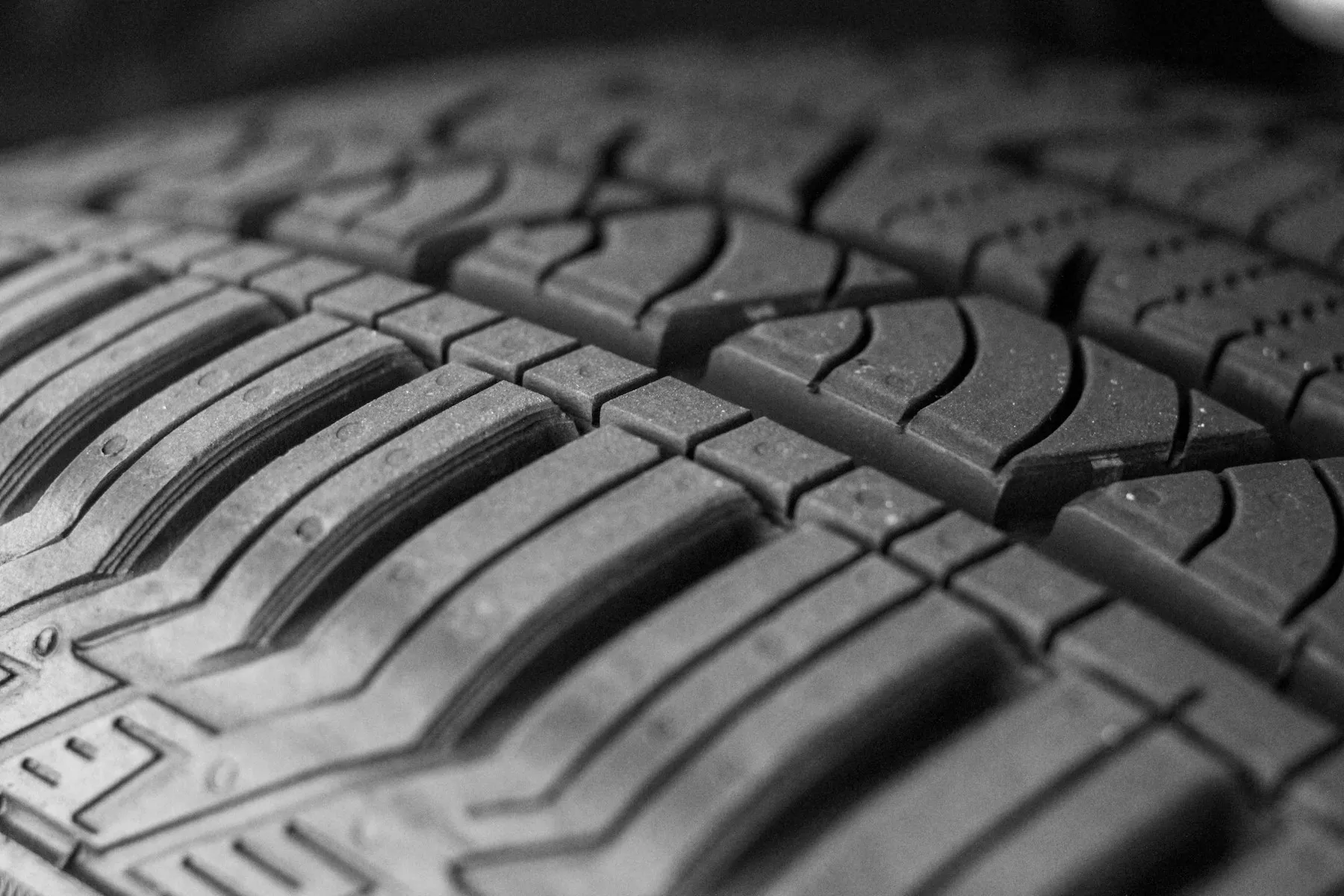
While you are down by the wheels: the legal minimum in Denmark is 1.6 mm, but the Danish Road Safety Council recommends at least 3 mm on winter tyres, and we also recommend replacing summer tyres at 3 mm. Use a cheap tread depth gauge, or look for the wear indicators: small raised bars at the bottom of the grooves. When the tread is level with them, the tyre is down to 1.6 mm.
Not sure? Drop by. We are happy to check pressure and tread for free while you wait.